Patient advice on home visits
To allow us to offer the best quality of care to all and make best use of limited finite resources home visits are offered exceptionally, not routinely.
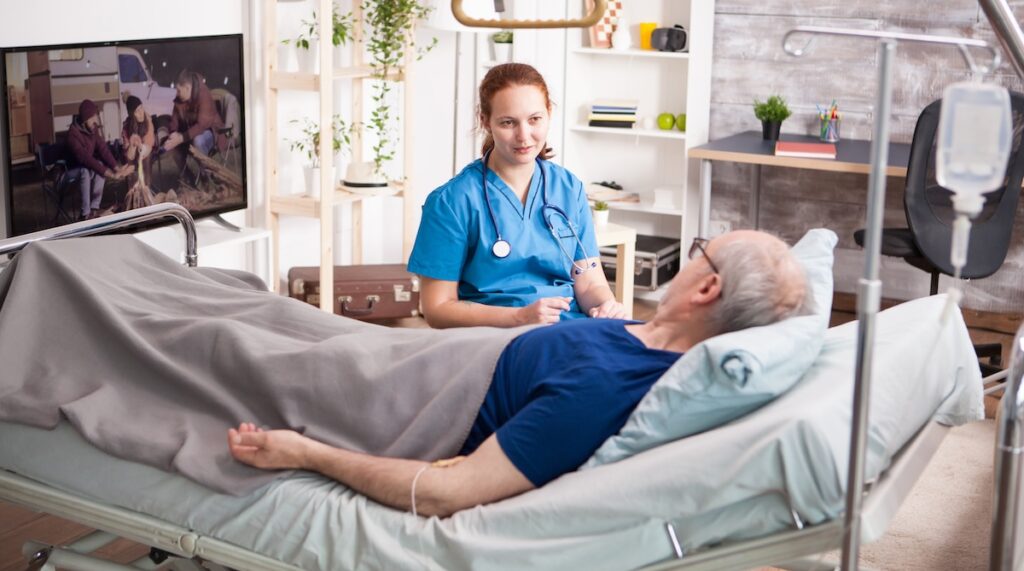
We want to offer the shortest waiting times for patients to see a doctor so please bear in mind that 4 to 6 patients can typically be seen by a doctor at the surgery in the time it takes to complete a single home visit. The emphasis in this policy is that clinical effectiveness must take precedence over patient convenience.
Most patients who need to consult a GP will be seen at the surgery, but we continue to make a limited number of home visits when this is appropriate.
Home visits are reserved for the following groups of patients:
· Terminally ill
· Housebound patients (any patient who can leave home for any reason is not considered to be housebound)
· Severely ill patients who cannot be mobilised. This includes patients who are housebound temporarily as a consequence of an episode of illness.
Requesting a home visit
Requests for visits must normally be made before 10:00am.
Visiting will normally take place after morning surgery.
Please only request home visits if you are incapable of attending the surgery.
Whenever possible, we expect patients to come into the surgery as the facilities are far better for examination and treatment.
When you call to request a visit, please give the reception team information about your symptoms as it helps us to judge the urgency of your condition. Receptionists are trained to do this, and all information is treated confidentially.
Please also provide a contact number as your visit request will be triaged by a clinician who may wish to call you to gather more information to get you the care that you need.
The clinician will make an assessment and might then arrange a visit, direct your care to a more appropriate care provider, arranges a surgery appointment or conduct a telephone consultation. Visits requested later in the day that are for the housebound, but are not urgent, will not be seen that day but instead triaged to a more appropriate time.
Medical emergencies
In the case of serious medical emergencies, ‘999’ should be called. The following list is not exhaustive, but conditions which are a medical emergency are:
· loss of consciousness
· an acute confused state
· fits that are not stopping
· persistent, severe chest pain
· breathing difficulties
· severe bleeding that cannot be stopped
· severe allergic reactions
· severe burns or scalds
Transport issues for the patient
It is not the GP practices responsibility to arrange transport, or to perform home visits because the patient has difficulty arranging transport.
In these circumstances, patients should seek transport help from relatives, friends, car care schemes or taxi firms.
To avoid confusion any person who requires a specialist vehicle (Ambulance) or a two-person escort would be regarded as housebound.
Childcare issues for a patient
If a patient has difficulty arranging for someone to care for their children whilst attending appointments, the patients are welcome to bring their children to the surgery.